
60 Bible Verses About Fasting for Breakthrough
Fasting scriptures for breakthrough are Bible verses that guide and encourage believers during seasons of fasting and prayer. They teach us to seek God with faith, humility, and a sincere heart. These Scriptures can bring hope when we need healing, wisdom, strength, direction, or spiritual renewal in difficult times.
Are you praying for a breakthrough but still waiting for an answer? Do not lose hope when the situation seems impossible. The Bible is filled with powerful words that can strengthen your faith and remind you that God is always present. These Scriptures can help you pray with greater confidence and trust.
Fasting scriptures for breakthrough show how people in the Bible sought God during times of trouble, repentance, and uncertainty. They remind us that fasting is not a way to force God to act. Instead, it helps us draw closer to Him, surrender our worries, and trust His perfect timing and purpose.
Bible Verses About Fasting for Breakthrough
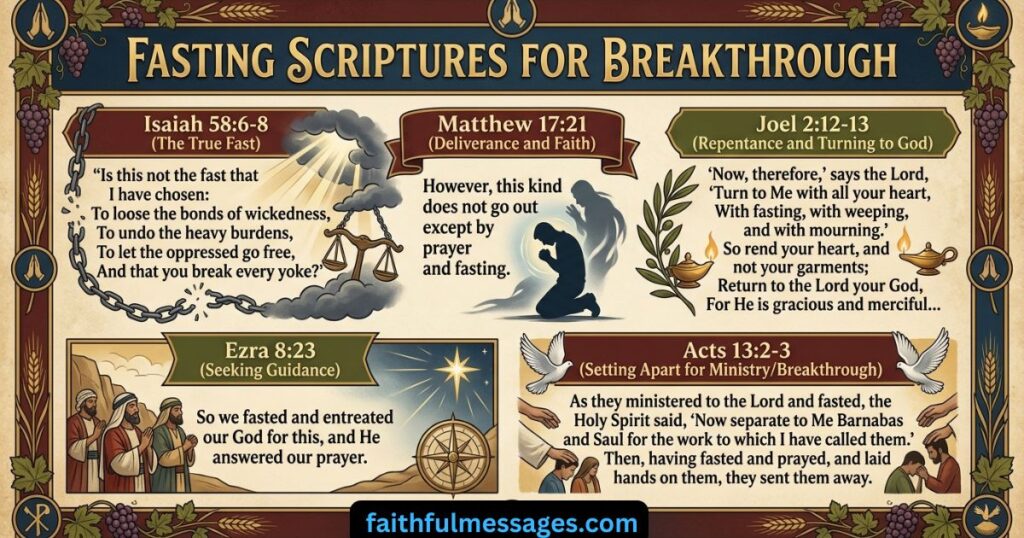
The following collection brings together 60 Bible verses about fasting for breakthrough and related passages about prayer, dependence on God, repentance, and spiritual growth. Each Scripture offers a different lesson about biblical fasting and how it can help believers pursue God during difficult or important seasons of life.
| Scripture | Main Theme | Spiritual Lesson |
| Isaiah 58:6 | Freedom | True fasting should produce righteous action |
| Isaiah 58:8 | Healing | God brings light and restoration |
| Isaiah 58:9 | Prayer | God hears sincere cries |
| Joel 2:12 | Returning to God | Fasting can express wholehearted repentance |
| Joel 2:13 | Sincere repentance | God looks at the heart |
| Matthew 6:16 | Humility | Fasting should not seek human praise |
| Matthew 6:17–18 | Private devotion | God sees sincere devotion |
| Matthew 17:21 | Spiritual battle | Prayer and fasting reflect dependence on God |
| Mark 9:29 | Prayer | Difficult battles require spiritual dependence |
| Ezra 8:23 | Protection | God can be sought during uncertain situations |
| Ezra 8:21 | Humility | Fasting can accompany a request for guidance |
| Esther 4:16 | Courage | Corporate fasting can unite people in crisis |
| Esther 9:31 | Remembrance | Fasting can accompany remembrance and sorrow |
| Psalm 35:13 | Intercession | Fasting can express concern for others |
| Psalm 69:10 | Sorrow | Fasting can accompany deep spiritual grief |
| Daniel 9:3 | Seeking God | Fasting can accompany earnest prayer |
| Daniel 10:2–3 | Perseverance | Persistent seeking requires endurance |
| Daniel 10:12 | God hears | Delayed answers do not mean ignored prayers |
| Acts 13:2–3 | Calling | Fasting can accompany spiritual discernment |
| Acts 14:23 | Leadership | Prayer and fasting can accompany important decisions |
| Luke 2:37 | Devotion | Fasting can become part of a life of worship |
| Luke 4:1–2 | Preparation | Jesus fasted before His ministry |
| Nehemiah 1:4 | Restoration | Fasting can accompany intercession |
| Nehemiah 9:1 | Repentance | Communities can fast together |
| 2 Chronicles 20:3 | Crisis | Fasting can express dependence on God |
| 2 Samuel 12:16 | Desperation | Fasting can accompany heartfelt prayer |
| Jonah 3:5 | Repentance | Fasting can accompany turning to God |
| Jonah 3:10 | Mercy | Repentance can lead to changed circumstances |
| Zechariah 7:5 | Motives | God cares about why we fast |
| Zechariah 8:19 | Joy | God can turn mourning into celebration |
| 1 Corinthians 7:5 | Devotion | Fasting and prayer require wisdom |
| Psalm 109:24 | Sacrifice | Fasting can involve physical weakness |
| Deuteronomy 9:18 | Intercession | Fasting can accompany prayer for others |
| Deuteronomy 9:9 | Encounter | Moses fasted during a significant encounter |
| Exodus 34:28 | God’s presence | Fasting accompanied Moses’ encounter with God |
| 1 Kings 19:8 | Strength | God provides strength in weakness |
| Matthew 4:4 | God’s Word | Spiritual nourishment is essential |
| James 4:8 | Nearness to God | Believers are called to draw close to God |
| Jeremiah 29:13 | Wholehearted seeking | God promises to be found by sincere seekers |
| Hebrews 11:6 | Faith | Seeking God requires faith |
| Psalm 42:1–2 | Spiritual hunger | Deep desire for God can shape prayer |
| Psalm 63:1 | Thirst for God | Spiritual longing can become worship |
| Matthew 9:15 | Future fasting | Jesus taught that His followers would fast |
| Acts 10:30 | Prayer | Fasting can accompany earnest spiritual seeking |
| Judges 20:26 | Repentance | Fasting can accompany communal prayer |
| 1 Samuel 7:6 | Returning to God | Fasting can accompany repentance |
| 2 Samuel 1:12 | Mourning | Fasting can express grief and compassion |
| Ezra 10:6 | Confession | Fasting can accompany serious repentance |
| Daniel 6:18 | Concern | Fasting can accompany deep concern and prayer |
1. Isaiah 58:6
Isaiah 58 is one of the most important chapters for understanding Isaiah 58 fasting. God explains that genuine fasting is not merely an outward religious activity. True fasting should affect how people live and treat others. The passage speaks about loosening chains, helping the oppressed, sharing with those in need, and removing injustice. This teaches us that biblical fasting should produce a heart that cares about righteousness and mercy.
This is an important lesson for anyone praying for a spiritual breakthrough. A person may spend hours without food while continuing to hold bitterness, pride, selfishness, or hatred in the heart. Isaiah reminds us that God wants more than an empty stomach. He wants a transformed heart. Therefore, fasting should move us toward obedience, compassion, forgiveness, and practical love.
2. Isaiah 58:8
Isaiah 58:8 gives a beautiful picture of light breaking forth like the morning. It connects sincere devotion with healing, righteousness, and God’s presence. For someone experiencing darkness, confusion, or discouragement, this passage provides hope that God can bring restoration into difficult circumstances.
The promise should not be treated as a guarantee that fasting will immediately solve every problem. Rather, it shows that God desires His people to walk in righteousness and trust Him. Fasting for spiritual breakthrough can help believers refocus their hearts when life feels overwhelming. It can become a season of spiritual renewal, where faith becomes stronger and hope begins to replace fear.
3. Isaiah 58:9
Isaiah 58:9 emphasizes the relationship between sincere devotion and calling upon the Lord. God invites His people to call, and He promises to answer. The passage also continues the theme of removing harmful behavior and caring for others.
This is valuable for anyone practicing breakthrough prayer. Prayer should not be separated from the way we live. Fasting and prayer work together when the believer is willing to listen to God and obey His direction. The goal is not simply to receive an answer but to develop a deeper relationship with the One who gives wisdom, mercy, and strength.
4. Joel 2:12
The Joel 2 fasting passage calls God’s people to return to Him with all their hearts, with fasting, weeping, and mourning. The emphasis is on returning. Fasting becomes an expression of turning away from spiritual distance and intentionally moving closer to God.
This verse is especially meaningful during seasons when a person feels spiritually dry. Fasting can create a deliberate pause from normal routines and help a believer remember what matters most. It can become an opportunity for prayer, worship, repentance, and seeking God wholeheartedly.
5. Joel 2:13
Joel 2:13 teaches that God wants the heart rather than empty outward rituals. The language of tearing the heart rather than merely tearing clothing emphasizes genuine repentance.
This principle is central to fasting and repentance. A person can fast while refusing to change harmful habits, but biblical fasting calls for inner transformation. God looks beyond the outward practice and sees the motives, attitudes, and desires of the heart. True fasting should lead to greater humility, obedience, forgiveness, and spiritual transformation.
6. Matthew 6:16
In the Matthew 6 fasting passage, Jesus warns His followers not to make their fasting obvious simply to receive admiration. He teaches that fasting should not become a performance designed to gain attention.
This gives Christian fasting an important foundation. The purpose is not to impress friends, family members, church members, or social media followers. The purpose is to seek God. Private devotion can often be more meaningful than public recognition because it forces us to examine why we are fasting. Christian fasting should come from love for God rather than a desire for human approval.
7. Matthew 6:17–18
Jesus continues His teaching by describing a quiet and sincere approach to fasting. He points believers toward a private relationship with the Father who sees what happens in secret.
This passage reminds us that God sees what people cannot see. He sees the sacrifice, the prayer, the tears, the motives, and the faith behind the fast. When believers practice prayer and fasting, they do not need to prove their devotion to anyone else. Their confidence rests in God’s knowledge and care.
8. Matthew 17:21*
Matthew 17:21 is included in some Bible translations but is absent or footnoted in many modern translations because of textual differences among ancient manuscripts. The larger passage focuses on Jesus teaching His disciples about faith and spiritual opposition.
The lesson should therefore be approached carefully. Matthew 17 prayer and fasting is often discussed in Christian teaching as an example of deeper spiritual dependence, but fasting should not be presented as a magical technique that automatically defeats every problem. Prayer, faith, dependence on God, and obedience remain central.
9. Mark 9:29
In Mark 9:29, Jesus points His disciples toward prayer in the context of a difficult spiritual situation. The passage teaches that human strength is not enough for every battle.
The key principle behind Mark 9:29 is dependence on God. Fasting can support prayer by helping believers focus their attention on Him. It can remind us that spiritual battles are not won through pride or self-confidence. Spiritual strength comes from dependence on God.
10. Ezra 8:23
The Ezra 8 fasting account shows Ezra and the people fasting and seeking God for protection during a difficult journey. They recognized that they needed God’s help and placed their trust in Him.
This passage is useful when believers face uncertainty. A person may be starting a new job, moving to a new place, making a major decision, facing financial pressure, or praying about family concerns. Fasting can become an intentional way of saying, “God, I need Your wisdom and protection.” This is one reason fasting for direction can be spiritually meaningful.
Read also:The Great Biblical Meaning of the Name CARTER
11. Ezra 8:21
Ezra proclaimed a fast so the people could humble themselves before God. This makes humility one of the clearest themes in biblical fasting.
Humility before God means recognizing that we do not have complete control over our circumstances. Fasting can remind us that our lives depend on God. Instead of demanding an outcome, we can surrender our plans and ask God to guide us according to His wisdom.
12. Esther 4:16
Esther called for fasting before she approached the king during a dangerous situation. Her request brought people together in a serious moment of crisis.
Esther fasting and prayer demonstrates the value of unity. Sometimes people need to seek God together when facing major challenges. This is an example of corporate fasting, where a group intentionally fasts and prays for a shared spiritual concern. Esther’s story also shows that fasting does not replace courageous action. After fasting, Esther still had to step forward and do what she believed was right.
13. Esther 9:31
Esther 9:31 refers to fasting and lamentation in connection with the events surrounding God’s deliverance of His people. It shows how fasting could become connected with remembrance.
When God brings someone through a difficult season, remembering that faithfulness matters. A believer can look back and say, “God helped me before, and I can trust Him again.” Fasting can therefore be connected not only with asking but also with remembering God’s mercy.
14. Psalm 35:13
David describes humbling himself with fasting while praying for others. This reveals an important side of fasting: intercession.
Fasting does not have to focus entirely on personal needs. It can involve praying for a spouse, child, friend, church, community, or someone experiencing hardship. Fasting for healing and fasting for restoration can include sincere intercession for people who need God’s help.
15. Psalm 69:10
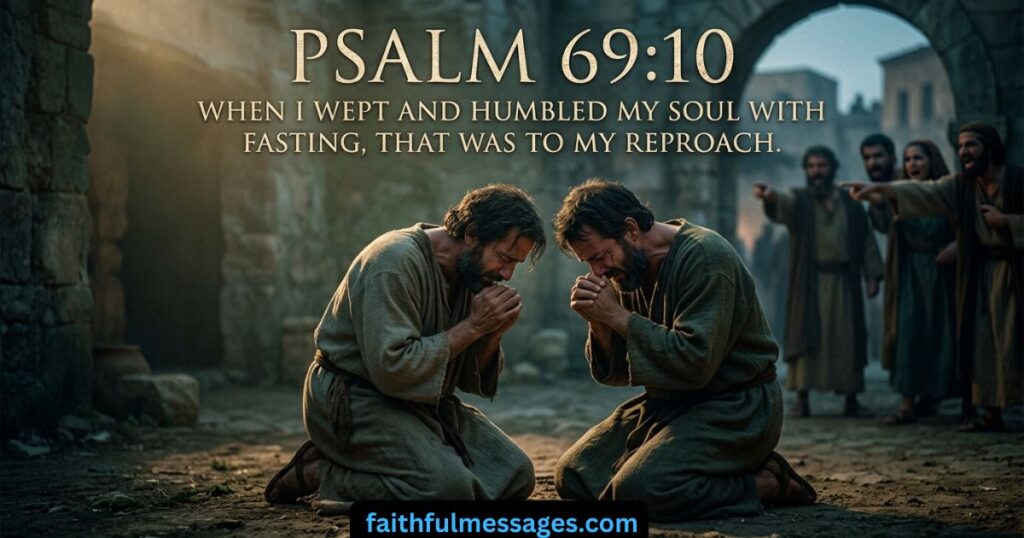
Psalm 69 connects fasting with sorrow and emotional pain. David’s experience shows that fasting can accompany seasons of deep distress.
Not every fast begins with celebration or confidence. Sometimes people fast because they are hurting and desperately need God’s presence. During such seasons, fasting can become a physical expression of spiritual hunger. It says, in effect, “God, I need You more than I need comfort from my circumstances.”
16. Daniel 9:3
Daniel intentionally turned toward God with prayer, fasting, confession, and petition. His example demonstrates focused spiritual seeking.
Daniel fasting and prayer provides a strong model for believers who need clarity. Instead of reacting only to circumstances, Daniel deliberately sought God. His fasting was joined with Scripture, confession, prayer, and an understanding of God’s promises. This teaches us that effective fasting should be part of a larger relationship with God.
17. Daniel 10:2–3
Daniel describes a period of mourning that lasted three weeks. His experience illustrates perseverance during a season when the answer did not come immediately.
This is important because people sometimes assume that answered prayer must happen quickly after a fast. Scripture does not teach that. Daniel’s experience shows that believers may need persistent prayer even when they cannot see what God is doing. Spiritual maturity means continuing to trust God when the answer takes time.
18. Daniel 10:12
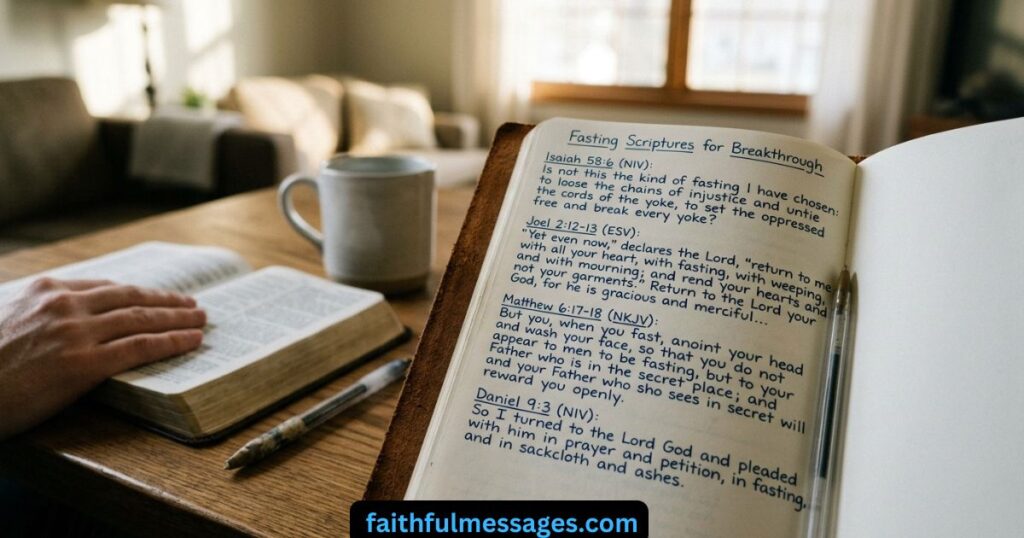
Daniel 10:12 gives an encouraging message: Daniel’s words were heard from the first day he humbled himself before God. The delay was not proof that God had ignored him.
This can bring comfort to anyone praying for a breakthrough. Sometimes circumstances remain unchanged even though God is already working. Fasting does not control God’s timetable. Instead, it can help believers remain faithful while they wait. Fasting and faith belong together because faith trusts God even when the answer is not yet visible.
19. Acts 13:2–3
The Acts 13 fasting passage describes believers worshiping, fasting, and listening for God’s direction. During this time, the Holy Spirit directed them toward a ministry assignment.
This is a powerful example of fasting for discernment. When people need to make important decisions, fasting can create space to pray and listen carefully. Fasting for direction does not mean expecting a supernatural sign for every small decision. It means intentionally placing major decisions before God and remaining open to His wisdom.
20. Acts 14:23
Acts 14:23 describes prayer and fasting in connection with appointing church leaders. This shows that fasting was associated with serious spiritual responsibility.
Leaders make decisions that affect many people. Prayer and fasting can remind them to seek God’s wisdom rather than relying only on personal preferences. This principle applies beyond church leadership. Anyone making an important decision can benefit from slowing down, praying, studying Scripture, and asking God for divine guidance.
21. Luke 2:37
Anna is described as a woman who worshiped in the temple with fasting and prayer. Her example presents fasting as part of a consistent life of devotion.
This is different from fasting only when a crisis appears. A believer may also fast as part of a broader pattern of spiritual discipline. The goal is not to measure spirituality by the number of fasts but to cultivate a heart that remains attentive to God.
22. Luke 4:1–2
Jesus fasted for forty days before facing temptation in the wilderness. This is one of the most significant examples of fasting in the New Testament.
Jesus’ fast shows that fasting can accompany preparation for an important season. Yet the passage also makes clear that fasting does not remove temptation or make life effortless. Instead, Jesus remained anchored in God’s Word and resisted temptation through obedience. His example teaches that spiritual preparation involves Scripture, prayer, faith, and dependence on God.
23. Nehemiah 1:4
When Nehemiah heard about the condition of Jerusalem, he wept, mourned, fasted, and prayed. His response reveals how fasting can flow from a genuine burden.
Nehemiah fasting was not simply about Nehemiah’s personal needs. He was concerned about his people and the condition of the city. This teaches us that fasting can deepen compassion and motivate us toward constructive action. Spiritual concern should eventually produce faithful obedience.
24. Nehemiah 9:1
Nehemiah 9 describes a gathering where people assembled with fasting, confession, and separation from sinful practices. This is another example of corporate fasting.
A community can sometimes experience spiritual renewal when people come together to confess, worship, study Scripture, and seek God. The passage shows that fasting can be connected with humility and repentance rather than simply requesting blessings.
25. 2 Chronicles 20:3
Jehoshaphat faced a serious threat and responded by seeking the Lord and proclaiming a fast. The Jehoshaphat fasting account is one of the clearest biblical examples of turning toward God during a crisis.
The king did not pretend that the problem was small. He recognized the danger and sought divine help. This is a healthy model for believers today. Faith does not mean denying difficulties. It means bringing those difficulties honestly before God.
26. 2 Samuel 12:16
David fasted and pleaded with God during a painful personal crisis. His response shows the intensity of his grief and desire for God’s mercy.
The passage also teaches an important lesson about surrender. David prayed earnestly, but he could not control the final outcome. Sometimes a person may fast and pray sincerely yet receive an answer different from what they hoped for. Biblical fasting teaches dependence, not control.
27. Jonah 3:5
The Jonah fasting account describes the people of Nineveh believing God and declaring a fast. Their response showed seriousness about the warning they had received.
Fasting can be an expression of repentance when a person recognizes the need to change. It should not be used merely as a religious performance. Genuine repentance involves turning away from wrong behavior and turning toward God.
28. Jonah 3:10
God saw the changed response of the people of Nineveh. Their story demonstrates the relationship between repentance and God’s mercy.
This passage is sometimes presented as proof that fasting guarantees a desired result. A better lesson is that God responds to genuine repentance according to His mercy and wisdom. God’s mercy cannot be manipulated. Fasting should therefore lead to humility rather than an attitude of entitlement.
29. Zechariah 7:5
God challenged the people to examine the reason behind their fasting. He asked whether their fasting was truly directed toward Him.
This is one of the strongest biblical warnings about motives. A person can perform the outward action of fasting while having the wrong heart. Biblical fasting must be centered on God. Before beginning a fast, it is wise to ask, “Am I seeking God, or am I simply trying to get God to give me what I want?”
30. Zechariah 8:19
Zechariah 8:19 presents a hopeful picture in which former seasons of fasting and mourning become occasions for joy and celebration.
This passage reminds us that God can bring healing and restoration after difficult seasons. Sometimes breakthrough does not arrive in the form we expected. It may involve renewed relationships, deeper peace, restored faith, wisdom, or a new understanding of God’s purpose.
31. 1 Corinthians 7:5 (NKJV)
This passage connects temporary marital abstinence with prayer and fasting. It also emphasizes mutual agreement between married partners.
The principle is important because fasting should be practiced with wisdom and consideration. Spiritual devotion should never become an excuse for neglecting legitimate responsibilities or creating unnecessary conflict. Prayer and fasting should encourage greater love, wisdom, self-control, and devotion.
32. Psalm 109:24
David describes physical weakness associated with fasting. This verse reminds us that fasting involves a real physical sacrifice.
Not everyone can safely follow the same fasting pattern. Health needs, medications, age, pregnancy, work requirements, and other circumstances can affect what form of fasting is appropriate. Biblical fasting should be approached wisely. The spiritual purpose should never become an excuse for harming the body.
33. Deuteronomy 9:18
Moses describes falling before the Lord and abstaining from food and water while interceding for Israel. His example highlights the seriousness of intercession.
Fasting can sometimes become an expression of sacrificial prayer for others. A believer may set aside food or another legitimate comfort for a season while focusing attention on a person’s need. This is not about earning God’s favor. It is about intentionally giving time and attention to seeking God.
Read also:80 Powerful Prophetic Declarations for Breakthroughs
34. Deuteronomy 9:9
Moses remained on the mountain for forty days and nights without eating or drinking while receiving God’s commandments. This is an extraordinary biblical example.
It should not be treated as an ordinary model for everyone. The passage describes a unique event connected with Moses’ calling and encounter with God. The broader lesson is that fasting can sometimes accompany moments of spiritual preparation and revelation.
35. Exodus 34:28
Exodus 34:28 again describes Moses’ extended period without food or water while he was with God. The event demonstrates the extraordinary nature of Moses’ encounter.
These passages help us understand that there are different types of fasting in Scripture, including temporary abstinence, restricted eating, communal fasting, and extraordinary extended fasts. Not every biblical fast should be copied literally. The principle is to seek God with humility and faith.
36. 1 Kings 19:8
Elijah traveled for forty days and forty nights after receiving nourishment from God. This passage highlights God’s ability to strengthen people during difficult journeys.
The story is valuable for anyone experiencing exhaustion or discouragement. Spiritual life includes seasons when believers feel weak. God does not shame people for weakness. He provides what they need and leads them forward. True spiritual strength ultimately comes from God.
37. Matthew 4:4
Jesus declared that human beings do not live by bread alone but by every word that comes from God. This statement provides a powerful spiritual foundation for fasting.
Food sustains the physical body, but God’s Word nourishes the inner life. Fasting can remind believers that physical needs are not the only needs that matter. A season of fasting can become an opportunity to spend more time reading Scripture, praying, worshiping, and listening to God’s truth.
38. James 4:8
James calls believers to draw near to God with the promise that God will draw near to them. Although this verse does not directly command fasting, its message fits naturally with the purpose of spiritual disciplines.
Fasting can help believers intentionally remove distractions and focus on God. The practice is not valuable because hunger itself has magical power. It is valuable when it leads to deeper surrender, repentance, worship, and spiritual renewal.
39. Jeremiah 29:13
Jeremiah 29:13 gives a powerful promise about seeking God wholeheartedly. God is not interested in half-hearted devotion.
This is one of the central ideas behind fasting for spiritual breakthrough. The goal should be more than receiving an answer. The goal is knowing God more deeply. When believers seek God wholeheartedly, they become more willing to accept His wisdom even when His answer differs from their expectations.
40. Hebrews 11:6
Hebrews 11:6 teaches that faith is essential when approaching God and that He rewards those who earnestly seek Him.
This verse provides a fitting foundation for fasting and faith. Fasting without faith can become a physical exercise without spiritual depth. Faith without surrender can become self-centered. When faith, prayer, Scripture, and fasting work together, believers can develop a deeper relationship with God.
41. Psalm 42:1–2
Psalm 42 describes a deep longing for God, using the picture of a thirsty deer searching for water. Although the passage does not directly command fasting, it captures the spiritual hunger that often motivates a person to fast.
This kind of longing can shape a believer’s entire prayer life. When someone desires God’s presence more deeply than temporary comfort, fasting can become an expression of that desire. It reminds the believer that the greatest need is not simply a changed circumstance but a closer relationship with God.
42. Psalm 63:1
Psalm 63 presents a powerful image of thirsting for God in a dry and difficult place. The psalm shows that spiritual hunger can exist even when physical circumstances are uncomfortable.
This passage is especially helpful when thinking about spiritual breakthrough. Sometimes the greatest breakthrough is not an immediate change outside us but a renewed desire for God inside us. Fasting can help us recognize that spiritual thirst and bring it honestly into prayer.
43. Matthew 9:15
Jesus spoke about a time when His disciples would fast after His departure. This demonstrates that fasting continued to have a place in the spiritual life of Jesus’ followers.
The passage helps establish that Christian fasting is not limited to the Old Testament. Believers in the early Christian community continued to practice fasting alongside prayer and worship. The emphasis, however, remains spiritual devotion rather than religious competition.
44. Acts 10:30
Cornelius describes a period of prayer and an important spiritual encounter. This passage illustrates how prayerful seeking can accompany moments of divine direction.
For believers seeking divine intervention, this account encourages attentiveness to God’s leading. Fasting should not be viewed as a way to demand supernatural experiences. Instead, it can help create a focused spiritual environment where a person is more intentional about listening, praying, and obeying.
45. Judges 20:26
The Israelites gathered, wept, fasted, and offered offerings before the Lord during a national crisis. Their response demonstrates how fasting can accompany communal grief and earnest prayer.
This is another example of corporate fasting. A community may fast when facing serious spiritual concerns, asking God for wisdom and mercy. The passage also reminds us that fasting can express sorrow rather than simply a request for prosperity or success.
46. 1 Samuel 7:6
The people of Israel gathered at Mizpah, fasted, confessed their sins, and sought the Lord. Their actions show a clear connection between fasting and repentance.
Fasting and repentance are closely connected in many biblical passages. When believers fast, they can use the time to examine their hearts, confess wrongdoing, forgive others, and seek God’s help to live differently. This kind of fasting seeks transformation rather than merely external results.
47. 2 Samuel 1:12
David and his men mourned, wept, and fasted after hearing about the deaths of Saul and Jonathan. Their fasting expressed genuine grief and compassion.
This passage shows that fasting is not always about asking God for a specific breakthrough. Sometimes it is a response to sorrow. It can create space to process grief before God and acknowledge that human beings need His comfort during painful experiences.
48. Ezra 10:6
Ezra withdrew, mourned, and sought God during a serious period of national repentance. The passage reflects the relationship between fasting, grief, confession, and spiritual correction.
A genuine fast can expose areas of life that need change. It can encourage a person to stop, reflect, and ask difficult questions about attitudes and actions. This can lead to spiritual transformation when repentance becomes practical obedience.
49. Daniel 6:18
After Daniel was placed in the lions’ den, King Darius spent the night fasting and was deeply concerned about Daniel. Although the king’s fasting was not presented as a standard religious fast, the passage demonstrates how fasting can express intense concern.
The broader lesson is that serious situations often cause people to recognize their dependence and limitations. Believers can bring those fears before God through persistent prayer, trusting Him even when circumstances seem impossible.
50. Psalm 37:5
Psalm 37:5 encourages believers to commit their way to the Lord and trust Him. While this verse does not directly mention fasting, it captures the heart behind a godly fast: surrender.
A person who fasts for a breakthrough should ultimately place the situation into God’s hands. Fasting for breakthrough is not a contract with God. It is an opportunity to say, “Lord, I trust You with this situation. Give me wisdom, strengthen my faith, and help me follow Your will.” This attitude protects fasting from becoming an attempt to control God.
51. Psalm 25:4–5
“Show me your ways, Lord, teach me your paths.”
This passage is a beautiful prayer for God’s guidance and direction. Although it does not directly mention fasting, it fits naturally with a season of fasting for direction because it expresses a sincere desire to know God’s ways. When believers fast, they can use the time to ask God for wisdom instead of relying only on their own understanding. This kind of seeking can bring spiritual clarity and help believers become more willing to follow God’s path.
52. Psalm 27:8
“My heart says of you, ‘Seek his face!’ Your face, Lord, I will seek.”
Psalm 27:8 captures the heart of seeking God wholeheartedly. The verse reminds us that the greatest purpose of fasting is not simply receiving something from God but drawing closer to Him. A believer who enters a fast with a sincere desire for God’s presence can use the time to worship, pray, and reflect on Scripture. This pursuit can lead to spiritual renewal and a deeper relationship with God.
53. Psalm 34:17
“The righteous cry out, and the Lord hears them; he delivers them from all their troubles.”
This verse offers encouragement to anyone facing a difficult season. It reminds believers that God hears the cries of His people and is able to bring deliverance. When combined with fasting and prayer, this truth can strengthen faith during times of fear or uncertainty. Fasting does not force God to act, but it can help believers place their troubles before Him with greater humility and trust.
54. Psalm 40:1
“I waited patiently for the Lord; he turned to me and heard my cry.”
Waiting is an important part of faith. Sometimes a person fasts and prays but does not see immediate results. Psalm 40:1 reminds us that God’s timing may require patience. Persistent prayer teaches believers to continue trusting God even when circumstances remain unchanged. A season of fasting can therefore become a lesson in endurance, helping the heart remain hopeful while waiting for God’s answer.
55. Psalm 91:1–2
“Whoever dwells in the shelter of the Most High will rest in the shadow of the Almighty.”
Psalm 91 emphasizes God’s protection and the confidence that comes from dwelling in His presence. For someone practicing fasting for spiritual breakthrough, this passage can become a source of comfort during uncertain circumstances. Instead of allowing fear to dominate the mind, believers can use their fasting time to meditate on God’s faithfulness and protection. Such reflection can strengthen spiritual strength and encourage deeper trust.
Read also:The Fascinating Biblical Meaning of the Name SKYLAR
56. Proverbs 3:5–6
“Trust in the Lord with all your heart and lean not on your own understanding.”
This passage provides an important foundation for fasting and faith. Fasting should not be based on the belief that we can control God or force Him to give us a particular answer. Instead, it should encourage complete dependence on Him. When believers surrender their plans and ask God to direct their paths, fasting can become a meaningful practice of trust and divine guidance.
57. Matthew 6:33
“But seek first his kingdom and his righteousness, and all these things will be given to you as well.”
Jesus teaches His followers to put God’s kingdom first. This principle explains why Christian fasting should focus primarily on God rather than material results. A person may begin a fast because of a specific need, but the deeper purpose should be to seek God’s presence and will. When God becomes the center of the fast, the believer develops greater spiritual focus and learns to trust Him with every concern.
58. Luke 11:9
“So I say to you: Ask and it will be given to you; seek and you will find.”
This verse encourages believers to approach God with confidence and persistence. It fits well with breakthrough prayer because it reminds Christians not to give up when an answer takes time. Fasting can accompany this persistent seeking by creating a focused period of prayer and reflection. The believer continues asking, seeking, and trusting while leaving the final outcome in God’s hands.
59. Romans 12:2
“Be transformed by the renewing of your mind.”
Romans 12:2 highlights spiritual transformation, which is often a deeper form of breakthrough than a changed circumstance. Fasting can help believers examine their thoughts, habits, desires, and priorities before God. When combined with Scripture and prayer, fasting can encourage a renewed mind and a stronger commitment to God’s will. True spiritual breakthrough may begin within the heart before it becomes visible in external circumstances.
60. Philippians 4:6–7
“Do not be anxious about anything, but in every situation, by prayer and petition, with thanksgiving, present your requests to God.”
This passage offers a powerful response to anxiety and uncertainty. Believers are encouraged to bring their requests to God while maintaining thanksgiving. During a season of prayer and fasting, this Scripture can remind us to replace fear with trust. God’s answer may come through divine intervention, changed circumstances, or supernatural peace that guards the heart and mind. In every case, fasting can help believers surrender their concerns and rest more deeply in God.
Understanding the Purpose of Fasting in the Bible

The purpose of fasting in Scripture is broader than simply asking God for something. Fasting in the Bible appears in moments of repentance, mourning, worship, intercession, preparation, crisis, spiritual seeking, and decision-making. These different purposes help us understand why the practice remains meaningful for many Christians today.
A biblical fast can help a person slow down and pay closer attention to God. Modern life contains constant notifications, entertainment, responsibilities, and distractions. Setting aside something for a period can create intentional space for Scripture and prayer. The value is not in hunger itself but in what the believer does with that time and attention.
The Connection Between Fasting and Prayer
Fasting and prayer are often connected because fasting turns the believer’s attention toward God. Instead of allowing hunger or sacrifice to become the main focus, the person can use the time to pray, read Scripture, worship, confess sin, and seek wisdom.
A useful way to understand it is simple:
| Practice | Spiritual Focus |
| Fasting | Self-denial and intentional focus |
| Prayer | Communication with God |
| Scripture | Knowing God’s truth |
| Repentance | Turning away from sin |
| Worship | Honoring God |
| Faith | Trusting God’s character |
| Obedience | Living according to God’s direction |
When these practices work together, fasting can become a meaningful spiritual discipline instead of an isolated religious activity.
Does Fasting Guarantee a Spiritual Breakthrough?
No. The Bible does not present fasting as a guaranteed method for getting whatever we request. God cannot be manipulated by hunger, sacrifice, or religious effort. Scripture repeatedly points believers toward faith, obedience, humility, and trust.
The phrase spiritual breakthrough can mean different things. Sometimes a person receives an answer to prayer. Sometimes God provides divine intervention in an unexpected situation. At other times, breakthrough looks like peace during hardship, freedom from destructive habits, restored relationships, greater wisdom, renewed faith, or courage to obey God.
This distinction matters because it keeps fasting centered on God rather than on a desired result. The strongest biblical approach is not, “If I fast long enough, God must give me what I want.” It is, “I will seek God, surrender my desires, trust His wisdom, and remain faithful regardless of the outcome.”
How Fasting Can Support Spiritual Breakthrough
Fasting can support spiritual clarity by reducing distractions and creating intentional time for prayer. It can also encourage humility because it reminds us that we are dependent on God. During a fast, believers may become more aware of their emotions, habits, fears, and desires, giving them opportunities to bring these areas before God.
For someone praying for healing and restoration, fasting may become part of a larger season of prayer and trust. For someone seeking deliverance, it can accompany repentance, Scripture, accountability, and dependence on God. For someone needing God’s guidance, fasting can create focused time to pray over a decision without treating every feeling as a divine message.
The result may be an external change, but it may also be an internal transformation. That internal work can be just as important as the breakthrough a person originally requested.
Read also :80 Powerful Prayer Points on Divine Direction with Scriptures
Types of Fasting Found in the Bible
The Bible presents several forms of fasting. Some involved complete abstinence from food for a limited period, while others involved restrictions. Some were individual, while others were communal.
| Type of Fast | Biblical Example | Main Purpose |
| Individual fasting | Daniel | Seeking God |
| Corporate fasting | Esther | United prayer |
| Repentance fasting | Nineveh | Turning toward God |
| Mourning fasting | David | Expressing grief |
| Crisis fasting | Jehoshaphat | Seeking God’s help |
| Preparation fasting | Jesus | Spiritual preparation |
| Restricted fasting | Daniel | Focused devotion |
| Intercessory fasting | Moses | Praying for others |
These examples show why there is no single biblical formula that every Christian must follow. The length and form of a fast should be considered carefully and practiced wisely.
A Simple Biblical Approach to Fasting for Breakthrough
A healthy fast begins with a clear spiritual purpose. Instead of focusing only on the problem, begin by focusing on God. Read Scripture, pray honestly, worship, confess sin where necessary, and ask for wisdom.
During the fast, keep returning to God’s character. Remember His faithfulness rather than allowing fear to control your thoughts. If you are praying for answered prayer, leave room for God’s answer to be different from what you expected.
After the fast, continue in obedience. A fast should not end with returning to the same attitudes and behaviors that needed attention. If God reveals something that needs to change, take practical steps toward change. In this way, fasting can become part of lasting spiritual renewal.
Our Thoughts On What the Bible Says About Fasting for Breakthrough
The Bible presents fasting as a serious and meaningful practice that can help believers humble themselves, pray with greater focus, seek God’s will, repent, intercede for others, and prepare for important seasons. The Bible verses about fasting for breakthrough throughout Scripture show that people fasted during moments of crisis, uncertainty, grief, repentance, leadership, worship, and spiritual seeking.
The greatest lesson is that fasting is about seeking God, not controlling God. A fast does not force a particular outcome, and it does not replace obedience. Instead, it helps believers surrender their desires and become more intentional about prayer and faith. When fasting is joined with Scripture, worship, repentance, and obedience, it can become a powerful part of Christian spiritual growth.
For someone facing a difficult season, fasting and prayer can provide a meaningful way to pause and bring the situation before God. You may be seeking fasting for healing, fasting for restoration, fasting for direction, or simply asking God for renewed faith. Whatever the need, the central invitation remains the same: draw near to God and trust Him.
“Seek God wholeheartedly, trust His wisdom, and let your fast draw your heart closer to Him.”
Ultimately, the deepest breakthrough prayer is not simply a request for God to change circumstances. It is a prayer that asks God to change us, strengthen us, guide us, and help us trust Him. Biblical fasting can become a doorway to greater humility, deeper faith, stronger prayer, and genuine spiritual transformation.
Conclusion
Fasting scriptures for breakthrough can give believers hope, strength, and clear spiritual direction. These Bible verses show how people sought God through fasting, prayer, repentance, and faith. Fasting does not force God to answer in a certain way. Instead, it helps us focus on God, grow in faith, and trust His wisdom. When we face trouble, these Scriptures remind us that God hears sincere prayers and remains faithful. They also teach us to stay humble and follow His Word.
Fasting scriptures for breakthrough can guide us through hard seasons with peace and confidence. They remind us that God can bring healing, restoration, wisdom, and spiritual strength at the right time. Keep reading Scripture, praying with faith, and trusting God’s plan. Let fasting become a way to draw closer to Him and grow stronger in your Christian life.
FAQs
What Scriptures to Read When You Are Fasting?
Read Isaiah 58:6–9, Matthew 6:16–18, Joel 2:12–13, Ezra 8:21–23, and Daniel 9:3 to strengthen your faith and focus.
What Are the Powerful Prayer Points During Fasting?
Pray for spiritual strength, divine guidance, healing, protection, deliverance, forgiveness, provision, and breakthrough according to God’s will.
How to Pray and Fast for Breakthrough?
Begin with prayer, surrender your request to God, read Scripture, and fast with faith while seeking His will rather than demanding a specific outcome.
How to Pray When Fasting?
Pray sincerely and humbly, confess your needs, thank God, ask for His guidance, and spend time listening to His Word and direction.
What Is the Biblically Correct Way to Fast?
Biblical fasting involves humility, prayer, repentance, and seeking God, not seeking attention or trying to manipulate Him into granting a request.
How to Do 7 Days Fasting and Prayer?
Set a clear spiritual purpose, choose a safe fasting method, pray and read Scripture daily, remain hydrated when appropriate, and seek medical guidance if needed.